




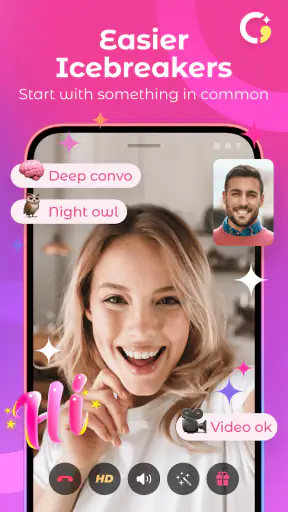
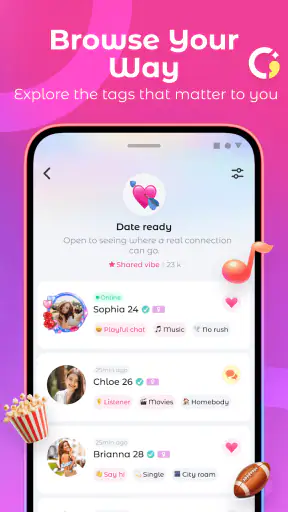
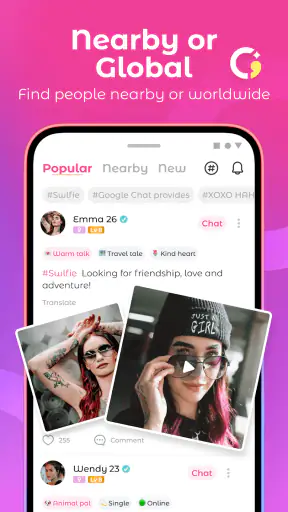
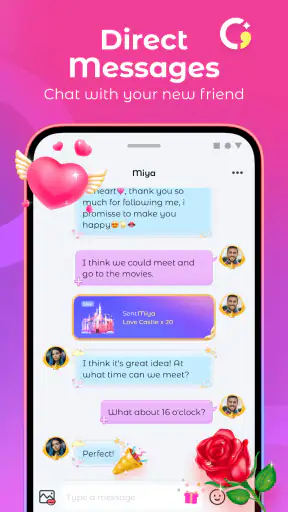

I approached ToChat - Make Friends Nearby as a social app for people who want conversations to begin with shared interests rather than a completely empty inbox. Its basic promise is easy to understand: meet people whose interests, energy, and chat habits feel compatible. In practice, that makes it more focused than a general social network, but also more dependent on how carefully you present yourself and manage conversations.
After spending time with it, my impression is that ToChat works best when I treat it as a tool for starting connections, not as a replacement for every social platform I already use. The useful part is the possibility of finding people nearby or people with a similar conversational style. The less comfortable part is that a mature social environment requires more judgment from the user. I would not recommend rushing into conversations, sharing personal details too quickly, or assuming that a good first exchange automatically means someone is trustworthy.
Developed by Team ToChat, the app sits in the social category and is free to install. It has reached over a million installs, with an average rating of 3.9 from roughly fifteen thousand ratings. Those figures suggest a sizeable enough community to make discovery worthwhile, while also hinting that the experience will not be equally smooth for everyone. ToChat is rated Mature 17+, so it is clearly aimed at older teenagers and adults rather than children.
How I would use ToChat from the first launch
Start with a clear reason for joining
The first mistake I would avoid is opening ToChat without knowing what kind of connection I want. “Meeting people” is too broad. I get more from the app when I decide whether I am looking for casual conversation, people interested in a particular hobby, local social possibilities, or simply a different chat atmosphere from my existing contacts.
That small decision affects how I respond to profiles and conversations. If I want hobby-based discussion, I look for a shared subject that can support more than one opening message. If I am mainly interested in nearby connections, I keep expectations realistic: proximity can make an introduction more practical, but it does not guarantee similar values, availability, or intentions.
I also recommend writing a short, specific profile rather than trying to sound impressive. Mentioning the kinds of conversations I enjoy gives another person a usable opening. A vague profile may attract attention, but it creates extra work for both sides because the first message has no obvious direction.
A repeatable conversation routine
My preferred workflow is simple. I browse slowly, select people who appear relevant to my interests, send one thoughtful opening, and then give the conversation room to develop. I do not send the same message repeatedly, because a social app becomes tiring when every exchange feels copied and transactional.
A good first message can refer to a shared interest and add a small question. That is more useful than a single compliment, which often leaves the other person unsure how to answer. I also try to match the other person’s pace. Someone who replies with short messages may prefer a lighter exchange, while someone who writes in detail may appreciate a more substantial response.
This is one of the app’s practical strengths: it encourages me to think about compatibility in terms of communication style, not just a list of interests. Two people can like the same subject and still be a poor match if one expects constant replies and the other prefers occasional conversation.
A realistic everyday scenario
Imagine that I have moved to a new area and want to find people who enjoy the same kind of weekend activity. I can use ToChat as an initial social bridge rather than immediately trying to arrange a meeting. I might begin with a conversation about the activity itself, learn whether the other person is local in a meaningful sense, and see whether the exchange remains comfortable over several messages.
If the conversation develops naturally, I would still keep the first in-person meeting public and tell someone I trust where I am going. That is not a criticism unique to ToChat; it is basic caution for any service that introduces strangers. The app can help me discover possible connections, but it cannot make personal safety decisions for me.
What the free starting point means
ToChat is free to use at the entry level, which makes it easy to test without committing money immediately. That matters because social apps are highly personal: a large community does not guarantee that the people I find will be a good fit for my interests or communication style.
There are in-app purchases ranging from $0.99 to $159.99 per item. I would treat those purchases carefully and avoid spending simply because a conversation feels slow. Paid options may be tempting when I want faster results, but no purchase can create genuine compatibility. My advice is to use the free experience long enough to decide whether the community and interaction style suit me before considering any optional spending.
Settings, habits, and the limits of faster socializing
Settings worth checking before becoming active
Before I start chatting seriously, I review the app’s available account and discovery controls instead of leaving every choice at its default. The exact options can vary by platform and app version, but the principle is consistent: I want to understand what information I am presenting, how discoverable I am, and how I can manage unwanted contact.
I pay particular attention to profile visibility, location-related presentation, notification behavior, and any tools for blocking or reporting. I prefer not to expose more personal information than necessary in a public-facing profile. A general area can be enough to communicate that I am local; precise details about home, work, daily routines, or regular destinations are unnecessary for an initial conversation.
Notifications deserve their own check. If every message interrupts my day, I start responding mechanically, which usually produces worse conversations. I would rather receive manageable alerts and open the app when I can give someone proper attention. This is a small adjustment, but it changes ToChat from a constant demand into a controlled part of my routine.
Use profile editing as a conversation shortcut
One of the most useful advanced habits is to treat the profile as a filter. I do not need to list everything about myself. Instead, I include a few concrete details that help the right people recognize a possible connection. For example, a specific type of music, a particular creative interest, or a preferred style of conversation gives visitors something to respond to.
This also reduces low-effort messages. When a profile explains what I actually enjoy discussing, people who are not interested can move on, while people with a genuine overlap have a natural starting point. That is more efficient than trying to make the first message carry the entire burden of explaining who I am.
I would revisit the profile after using the app for a while, but not constantly rewrite it to chase attention. Frequent changes can make the account feel unfocused. A better approach is to adjust one detail when I notice a recurring misunderstanding, such as people assuming I am looking for a different kind of interaction.
Faster patterns that do not feel careless
Experienced use is not about sending more messages. It is about reducing wasted effort. I use a short screening process: does the profile give me a genuine reason to write, does the person’s apparent communication style fit mine, and can I ask a respectful question without forcing intimacy?
If the answer is no, I move on. That is healthier than trying to turn every possible match into a conversation. It also protects my time and leaves room for exchanges that feel mutual.
When a conversation begins well, I keep track of its subject mentally and build from it instead of jumping between unrelated questions. A simple follow-up about something the other person already mentioned feels more natural than an interview checklist. If the exchange becomes repetitive, I can suggest a related topic or politely let it end.
I also avoid treating response speed as a measure of interest. People have different schedules, and a nearby connection does not mean someone is available whenever I am. The better signal is consistency and mutual effort over time. If I am always carrying the conversation, that is useful information even if the individual messages sound pleasant.
Where the app is stronger than usual alternatives
Compared with a broad social network, ToChat has a more direct purpose. General platforms are useful when I already know someone or want to follow public content, but they can be noisy when my goal is to meet people with a compatible chat style. ToChat’s focus makes discovery feel more intentional.
Compared with traditional messaging apps, it solves a different problem. Messaging services are excellent once I have an established contact, but they do not usually help me discover strangers around shared interests. ToChat is more useful at the beginning of that process, before a conversation has earned a place in my regular contacts.
Compared with dating-oriented services, the emphasis on interests and chat style can feel less narrowly romantic. That makes it a better fit for someone seeking conversation or friendship, although I would still communicate my intentions clearly. Users may interpret social interaction differently, and an ambiguous profile can create avoidable confusion.
The trade-off is that a focused discovery app still depends on the quality and activity of its community. A large install base does not mean every area will have the same selection of people or the same level of response. Someone living in a less active region may find the nearby aspect less valuable than someone in a busy city.
Advanced limits I would keep in mind
The biggest limitation is that matching around interests does not remove the uncertainty of meeting strangers online. Shared preferences are only an opening signal. They do not verify honesty, maturity, intentions, or offline compatibility. I would avoid interpreting a polished profile as proof of reliability.
The Mature 17+ rating is another reason to use judgment. I would not recommend the app for younger users, and I would be cautious about conversations that become sexual, manipulative, pressuring, or financially demanding. Any request for money, private documents, account access, or secrecy would be a clear reason for me to stop engaging and use the appropriate safety controls.
There is also a social limitation that no setting can completely solve: not every conversation will be reciprocal. Some people join briefly, some respond inconsistently, and some may be looking for a different kind of connection. ToChat is not the right choice for someone who expects guaranteed replies, instant close friendships, or a perfectly curated local community.
I would also skip it if I am uncomfortable with the basic idea of being discoverable to people I do not already know. In that case, a private group connected to an existing hobby or a messaging service used with known contacts may be a better fit. ToChat is most useful when I accept a certain amount of discovery while still maintaining clear boundaries.
Compatibility and practical device considerations
The current version is 1.34, and the app supports Android devices running version 6.0 or later. That broad compatibility makes it accessible on many older phones, although I would still keep the operating system and app updated when possible. Social applications handle personal conversations, so using a device with current security updates is a sensible habit.
I would not judge the experience only by the number of available profiles. The real test is whether I can find conversations that remain respectful and interesting after the first few messages. If I repeatedly find that local discovery does not produce useful connections, I would switch to a smaller interest group or a community built around a specific hobby rather than continuing to spend money or time hoping the next profile will solve the problem.
My verdict after using it as a routine
ToChat is a reasonable choice for adults who want a focused way to meet people around shared interests and conversational preferences. I like the idea of using it deliberately: a specific profile, careful discovery, thoughtful opening messages, controlled notifications, and a willingness to end conversations that do not feel mutual. Those habits make the experience more useful than simply browsing endlessly.
Its weaknesses are equally important. The app cannot guarantee active people nearby, meaningful replies, or safe intentions. The mature audience requires sensible boundaries, and the range of optional purchases means I would monitor spending rather than assume payment will improve the quality of connections. A 3.9 average rating reflects a generally mixed but viable experience, which matches my view: worthwhile for the right user, but not universally compelling.
I would recommend trying the free version first, completing the profile with enough detail to show my real interests, and judging the app by the quality of a few genuine conversations rather than by the number of profiles I can browse. I would not recommend it to anyone seeking a fully private social space, guaranteed local activity, or instant friendship without effort.
My final opinion is that ToChat - Make Friends Nearby works best when I use it as a measured introduction service. It can shorten the distance between “I would like to meet people who get my interests” and an actual conversation, but the user still has to provide the patience, honesty, and caution that turn an introduction into a worthwhile connection.


